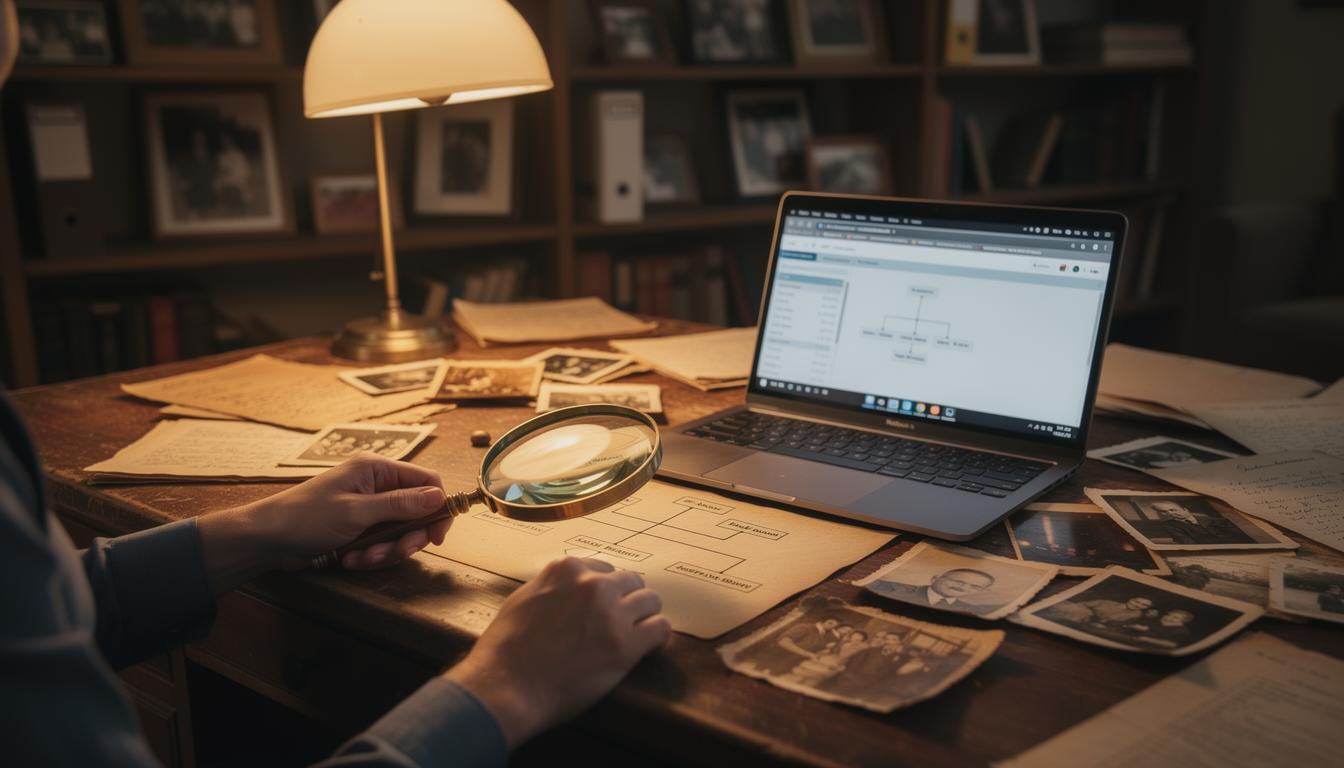
Curiosity never waits, certainly not for the timid. Hearts pound above keyboards, index fingers ready to reawaken histories, and the title sits like a persistent whisper, “How to Find Living Relatives, the best strategies for your family search.” The need bubbles close to the surface—secrets untold, memories misplaced, inherited health mysteries stuck on repeat. Digital methods now leap ahead, turning every search epic, intimate, sometimes both together.
This might interest you : Discover youthful skin: your guide to botox in london
The importance of reconnecting with living relatives
Old bonds stretch across generations; sometimes they snap, always they root themselves somewhere. Wars disrupt, migrations scatter, and daily life reshuffles the deck. In 2026, the urge grows more pressing, not nostalgia’s fault this time. Medical and genetic answers sets pulses racing, personalized care expects context, and those faded family mysteries become burning questions. One lies awake, picturing a cousin’s face or a story that fills in just one blank space on a medical record.
Reconnections offer laughter over screens, surprise tears, the uncanny sense of sharing a voice or a dimple. Fresh links heal, sometimes leave new scars; they push back emptiness, build bridges for the next generation.
Also to read : Transform your event with an inspiring women's day speaker
Sometimes, paperwork pushes the search forward, inheritance and legal matters make sure of it. Others simply anchor themselves, chasing origins, pulling invisible threads to stand tall. Every motivation sparks a new urgency in thousands of families, everywhere, every year. Resources like Find Living Relatives now offer comprehensive guides to help navigate these searches effectively.
Paper records stacked dusty, parish basements sighed under the weight. Not anymore. Digital vaults now unlock billions of images and names. Genealogy platforms brighten late nights and coffee-fueled weekends, faces popping up in neatly filtered search results. The old detective work speeds up. DNA ancestry testing—what a jolt. Lists hum with recognizable surnames; notifications ping about second cousins you never suspected lived next door or across the ocean. Social media? Not just scroll-and-snooze distraction. Facebook groups shake up the quiet, Instagram lines up faces familiar yet strange. Ordinary days now end with discoveries once thought reserved for fairy tales.
The transformation brought by technology in family research
No more county offices, no more slow-moving file clerks, just instant access. Every step to find living relatives in this decade means facing digitized archives. DNA mapping—one click opens family constellations previously lost. The smallest message from a stranger shifts reality: overnight, questions now bring answers. Databases boom: MyHeritage DNA, 23andMe, all racing towards forty-plus million users in the United States by spring 2026.
Language filters, regional tweaks, opt-in privacy dashboards, and filters so specific they hunt down a cousin separated by marital tradition or war.
Modern social media creates unexpected allies. Every day, communities form, spurred by pixelated photos or memories unearthed from a single post. Over seven thousand genealogy groups buzzed on Facebook last year, according to Meta’s reports. Successful reunions reach tens of thousands. No one predicted this chemistry, science, and group detective work—all patchworked together in real time. Sometimes, scrolling on a lunch break or posting a detail missed by others changes ten lives at once.
The most effective strategies to find living relatives
Too many choices—paralysis comes quickly, so where to direct attention? Online genealogy databases present themselves, the easiest leap, especially if searching with the phrase “find living relatives.” Marriage, census, immigration rolls appear on Ancestry.com within days of recording. MyHeritage, the global chameleon, adapts, offers translated records, and develops matching algorithms strong enough to unravel generations. FamilySearch.org maintains a reputation for wide coverage and no fees.
Money and time set the rules, premium features dig deeper but even free sites knock down early barriers. Every click matters and privacy always demands attention.
Paid versions promise richer data, DNA services lure with relationship maps and continent-spanning surprises.
| Platform | Notable Features | Cost |
|---|---|---|
| Ancestry.com | DNA matches, massive international database, advanced filters | Paid, limited free trial |
| MyHeritage | Global search, automatic translation, family tree tools | Tiered (free paid) |
| FamilySearch.org | Free records, global coverage, volunteer support | Free |
| 23andMe | Ethnicity mapping, DNA relatives map, health insights | Paid |
DNA testing surges ahead. Kits linger on kitchen counters, doubts swirl, results come anyway, doors open fast. Nebraskan cousins, a half-sibling one county over, a connection in Poland perhaps. DNA genealogy bulldozes past written histories, linking strangers through shared heritage blocks. At its best, the benefits grow tangible quickly—accurate, borderless, sometimes awkwardly personal. Privacy grumbles always, some step back, declining to share more. Most leap at the revelations. Tested relatives surface thanks to shared genomic segments, the science layered with a hint of fate. Every match reshapes the timeline—sometimes delight drowns all, sometimes confusion or new questions overshadow celebrations.
Social media—now the amateur detective’s best companion. *Genealogy requests on Facebook harness hundreds, sometimes thousands, who offer school records, group photos, family rumors.* LinkedIn works, businesslike, for those hoping to avoid the drama of family messages. Reddit? A single question pulls in helpers from five continents, tracing census lines from Wales to Wollongong. Digital communities correct, challenge, encourage, support, the family search turns communal, no need for solitude. Each unknown cousin, someone’s missing puzzle piece; every response, another line in the modern family story. Less isolation, more hope, networks pulse with activity that never ceases.
The initial steps before contacting potential relatives
Tension climbs, the heart stutters with possibility, but planning stays non-negotiable. Every miscellaneous note, every faded photo, every scrawled birth certificate lands on the desktop or on a phone screen now. *Preparation packs context, shores up weak memories, anchors approaches.*, Official documents help prevent blushing mistakes. Digital tools reorder and crosscheck, the checklist builds itself in minutes. Concrete objectives—who answers which question, which gap needs filling, what remains the mystery worth clarifying? It all counts.
Verification, necessary, never glamorous. Tears and laughter mix but facts must follow hunches. Multiple sources remove error. Date-matching, document-parsing, story-confirming, trees checked and rechecked with official documentation. DNA confirmation, still the strongest, reserved for the bold or the trusting. Sometimes old friends or intersecting anecdotes close the gap no science yet bridges. Every clue nudges closer to certainty. Sometimes the proof feels as important as the emotional win; sometimes more so.
| Verification Method | Reliability | Drawbacks |
|---|---|---|
| Official Documents | High | Missing data, spelling errors |
| DNA Testing | Very High | Privacy, cost concerns |
| Mutual Contacts/Stories | Moderate | Subjective, memory lapses |
The obstacles and effective solutions during family searches
Records vanish, sometimes in flames, sometimes in bureaucracy. Names twist or lose syllables, foreign alphabets throw off researchers. One misplaced initial, a changed surname, the thread snaps. Language differences stretch searches, requests for birth certificates snowball into weeks of translation headaches.
Emotions, maybe strongest of all, block the final message—fear, embarrassment, sometimes simple exhaustion. Every journey of discovery crashes into some wall, some absence, some silence.
All this, despite thousands of new tools, the process stalls, refuses to give every answer. Success never feels guaranteed.
Specialists in 2026 give advice shaped by repeated hurdles. Alternate spellings do the trick—names evolve through Ellis Island or under occupation, a single letter dobbed from Polish to English. Local church archives, overlooked by big databases, sometimes shelter vital birth or death records. Professional genealogists, election-certified or sourced from respected registries, solve the gnarled puzzles. Support groups—digital or flesh-and-blood—turn struggles less lonely, the quiet work of hunting for relatives softened by collective wisdom. Every reunion, each rediscovered bond, stands as proof that patience paired with creativity wins, eventually, at least once.
Consider Anna, jittery hands hovering, screen lit in a silent kitchen. One email, short and honest, sails toward Sarah, a newly matched cousin found online. Hours drag. Then—a response, shocked delight, “Sixty years, our family tree ended with us, now your photo proves otherwise.” Webcam tears, laughter echoing over laggy audio. The divide shrinks, the story no longer ends in silence. Boundaries lifted, a gap closed, two strangers discover family where neither expected. Second chances, fragile yet real—sometimes all it takes is a click and the nerve to hit send.
The best resources to keep improving your search for living relatives
Never a solo effort—support exists, hiding in plain sight; local records bristling with untapped clues, specialist organizations compiling expert directories, communities humming with late-night posts. Major genealogy websites—FamilySearch, MyHeritage, Ancestry—refresh monthly, accuracy grows with every new upload.
Rural town halls, public records lost in drawers, even non-digital family albums—sometimes overlooked, often invaluable
- Genealogy forums bubble with tips, disputes, and success stories
- Professional organizations steer those stuck or overwhelmed
- Public and church archives hold unique regional treasures
- Technology platforms foster transcontinental breakthroughs
Collect the names, cross timelines, piece together lost details—a network of helpers stands ready now.
The question lingers. What lengths merit a rediscovered relative? How far must one travel, online or in train queues, before the family puzzle snaps into place? Some answers always stay hidden. Most? Only a message away, scattered over continents, stirring just below the surface. The future unfolds with every new attempt, every record checked, every story patched into a broader tapestry.